 Español
  English
  Italiano
  Català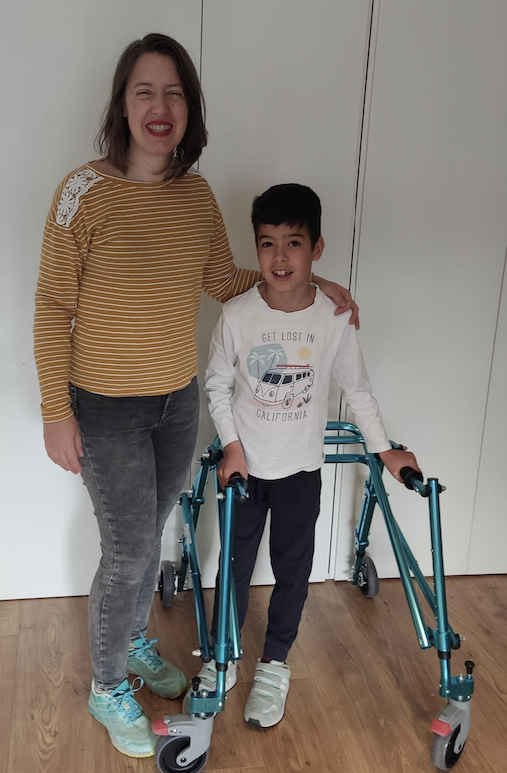
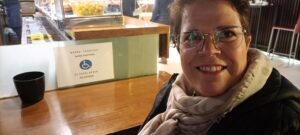
With this section, at AsoPMR, we aim to reach those going through difficult times with their disability. Many people have written to us expressing their need for support and warmth. At the same time, we seek to give visibility to unsung heroes who, with their daily efforts, make the world a more human place. And today, that hero is Laura, Leo’s mom, an 8-year-old and an AsoPMR member. She answers our interview alongside her son, who was born with a brain injury resulting in a motor disability.
Thank you, Laura and Leo!
For those who don’t know you in person. What qualities do you think define you?
Cheerful, tenacious, sociable.
What do you think has inspired your spirit of overcoming throughout your life?
The satisfaction of achieving what seemed difficult and, at times, impossible.
Is there any historical or fictional figure that inspires you?
I’m surrounded by strong and brave people who inspire me every day: in occupational therapy centers, in associations, during medical check-ups. Each of these people I meet has stories that reflect how tough and beautiful life is and how we can live it with joy, responsibility, and enthusiasm.
How has your perspective on limitations and possibilities evolved throughout your life?
There are things my son can’t do, and there are things I can’t do either 🙂, but if you want something, you should always try. You can look for adaptations or participate in activities in a different way, but the important thing is to try.
Is there any event or encounter that made you “click” regarding your situation?
I’ve received millions of “no’s”: No, your son can’t participate in this; he can’t go to that place; he can’t do this sport, or he can’t apply for this… And it turns out that, many times, he could. We found a way, we looked for adaptations, we did a preliminary presentation, or we tried days beforehand. It’s very hard to have to fight for everything, but every battle won makes it easier for the next person and for yourself.
How do you take care of yourself physically and mentally?
I enjoy walks with friends; talking while walking is so easy and so good… I also like to read and swim, although when it’s cold, I feel lazy 🙂.
And mentally, is there anything that helps you?
Being with my friends and family. I love staying home, and I feel good participating in activities at my children’s school or in the neighborhood.
What are the biggest challenges you’ve faced in your life and how have you overcome them?
Coping with my son’s diagnosis and accepting that our reality is different from most people’s. But I see him happy, and that’s what matters. Some people have everything and are not happy. There are better and worse days, but I think our life is good. I have a beautiful family, and I can’t imagine it any other way now.
What message would you give to those who are going through difficult times and need to find motivation?
That they participate in associations, that they know they are not alone and that they will find support there. That they surround themselves with people who love them: family, friends, groups in their close environment (reading, culture, sports, music, nature…). And when they face a barrier, they should speak up. It’s important to talk a lot, raise awareness, and look for solutions. When you share your concerns, solutions appear where you least expect them.
On the path to inclusion and accessibility, what are the major milestones that are still pending? What major headlines would you like to read in a newspaper about inclusion and accessibility?
All schools should be inclusive and accessible. Not only for children with disabilities but because it benefits all of society: the teacher who struggles to climb stairs, the pregnant woman, the kid who sprains an ankle and uses crutches, the girl who breaks a leg and has to use a wheelchair for a month, the delivery person who brings food to the dining hall…
Is there any cliché about disability that you think is very present in society?
The “handouts and quotas.” A disability entails many expenses. There are aids, yes, but they are totally insufficient, and accessing any activity requires much more effort. I don’t understand that urban legend of “handouts” when the assessment of the degree of disability is so strict and the aids are so few.
What are your next personal goals?
I live very much day by day; I don’t have big plans. I like to enjoy the small things.
Is there any message you’d like to send to AsoPMR members or anything you’d like to add?
I believe that participating in associations is the best way to share our situation and improve our lives and those of society as a whole. A diverse society is better: it knows more, is aware of more things, advances more.
Finally, if you’d like, could you share how you felt answering the interview and about my accompaniment in the process? Your testimony could encourage other members to share their story:
I think it’s good to reflect on our situations and share them.