 Español
  English
  Italiano
  Català
With this section, we want to reach those who are going through difficult times with their disability. Many people have written to us expressing their need for support and warmth. At the same time, we seek to give visibility to unsung heroes who, with their daily efforts, make the world a more humane place. And today, that hero is you. Thank you.
Tell us a bit about yourself: what’s your name, how old are you, and how would you like us to describe your situation as a person with reduced mobility?
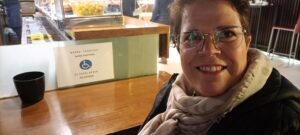
My name is Silvia Hatero Sánchez, I am 53 years old. The truth is I don’t have a way to describe my situation as a person with reduced mobility. I have many and quite severe after-effects that prevent my daily life from being normal, but I don’t feel like a different person from someone who doesn’t have a disability.
For those who don’t know you in person. What qualities do you think define you?
Humble, a fighter, but above all, very empathetic.
What do you think has inspired your spirit of overcoming throughout your life?
The desire to live.
Is there any historical or fictional figure that inspires you?
What has inspired me most is my daughter and the loss of an important friend to me.
How has your perspective on limitations and possibilities evolved throughout your life?
I have many limitations in my daily life, but I believe the basis of everything is to work every day to accept your situation. Sometimes we focus on overcoming, but over time you realize that acceptance is what needs to be worked on. From my point of view, it’s more important to accept what has happened to you than to overcome it, as I believe overcoming it is complicated.
Is there any event or encounter that made you “click” regarding your situation?
I changed my mindset once I was in the hospital, and because I couldn’t move, they had to lift me with a hoist to sit me in a chair.
How do you take care of yourself physically and mentally?
I always do adapted exercise three times a week, and mentally, I work on my self-esteem daily.
And mentally, is there anything that helps you?
My daily activities help me through what happened to me. I’ve started a mutual support group, written two books, and continue to do things.
What are the biggest challenges you’ve faced in your life and how have you overcome them?
My biggest challenge has been being able to walk again, even with the help of others. Seeing that your work yields results is what helps you accept.
What message would you give to those who are going through difficult times and need to find motivation?
No matter how hard what we have to live through is. If we have a second chance, it’s because there’s a function to fulfill in life. You just have to find yours.
On the path to inclusion and accessibility, what are the major milestones that are still pending? Or what major headlines would you like to read in a newspaper about inclusion and accessibility?
From my point of view, inclusion should be worked on starting from schools. As for accessibility, there are too many areas; in my opinion, everything should be adapted.
Is there any cliché about disability that you think is very present in society?
Well, I don’t even like the word “disability” anymore. It differentiates people when we are all equal.
What are your next personal goals?
I would like to write another book, and besides the title of emotional psychotherapist I obtained, I want to take another course on emotions.
Is there any message you’d like to send to AsoPMR members or anything you’d like to add?
Conformity is easier than anything else in the world. If you don’t pursue your dream or your goal, you won’t leave your comfort zone, much less your pain.
How did you feel responding to this interview? Has it been a significant experience for you? Your testimony can encourage other members to share their story.
I felt good, and I would very much like to have helped some member to tell their story. There is no better psychologist than oneself, and we can help each other.